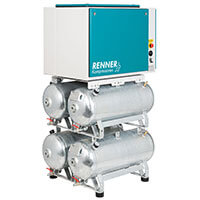
Troubleshooting: when the compressor is not running properly…
What do I do if my compressor has a fault? Is it a defect that needs repairing or perhaps just incorrect operation? And where do I start troubleshooting?
Here we give you tips on typical problems. Because the service engineer does not always have to come out!
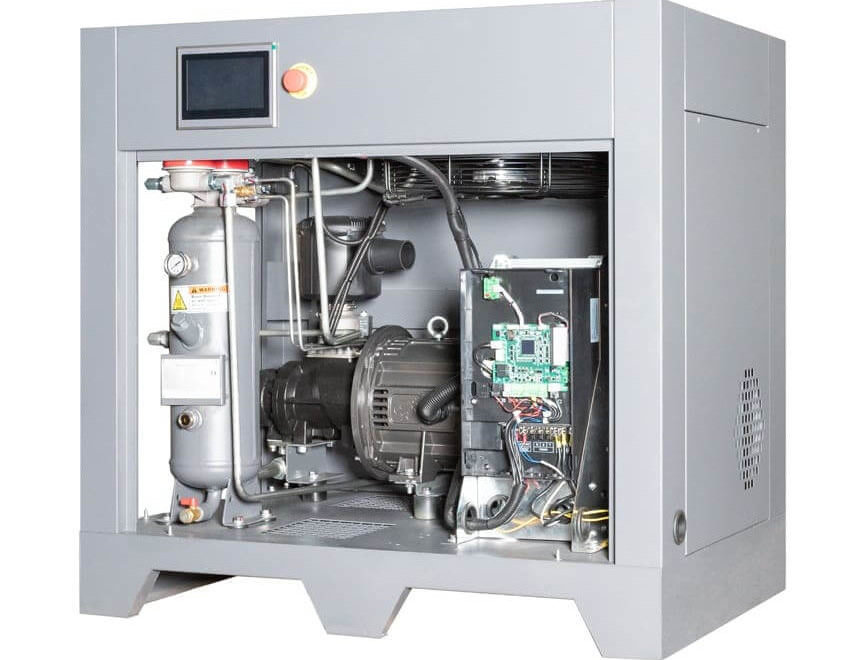
Why do I suddenly have so much oil in the compressed air? How can I prevent it?
If you notice unusual amounts of oil in the compressed air, there can be various reasons. Here are a few troubleshooting suggestions:
- Compressed air treatment:
- As trivial as it sounds: when was the last service? Filter elements must be replaced regularly!
- Are all the filters you need for your compressed air class really in place?
- Are they the right filters for your system (sized according to pressure and flow rate)?
- Is the flow velocity sufficient for the pre-separator (cyclone)?
- Oil circuit:
- Is the oil level too high, perhaps? You should always stick meticulously to the min./max. marking. “More is better” is the wrong approach here!
- If the oil scavenge line is blocked, the injected oil builds up in the airend. One sign of this could be rising oil consumption.
- Cooling and lubricating oil
- It is always advisable to use a high-quality compressor oil. This applies all the more, the more expensive the compressor is. Please follow the manufacturer’s recommendation or ask a specialist dealer.
- Incidentally, the right oil for your compressor does not depend only on the make. The conditions under which the compressed air is generated also play a role in a smooth process: particle load in the air, ambient temperature, service life, etc.
Why do I have oil in the compressed air even though I specifically bought an oil-free compressor?
- Oil vapours from the ambient air end up in the compressed air in higher concentrations. So the air your compressor draws in may be contaminated by other production processes. What you can do:
- change the compressor’s air filter regularly
- choose a better location for the compressor
- eliminate the oil source
- filter the air in the hall
- Oil in the line: If you connect a new, oil-free compressor to an old compressed air line, bear in mind that there is probably a certain amount of residual oil throughout the pipework. We therefore recommend filtering the compressed air accordingly, at least during the transition period.
My compressor is running hot. What can I do?
This problem can also have various causes. Fortunately, some of them can be identified quickly.
Piston compressor: The first question here is whether the machine may have been running for too long. Everyone surely knows that piston compressors in particular need sufficient breaks.
Enclosed compressor: Please check that all doors, flaps and side panels are properly closed. Compressor cooling only works if the system is sealed! Trying to “ventilate” the compressor on your own initiative has exactly the opposite effect! So: always keep the enclosure closed and only open it for maintenance.
You can then check the following points:
- Is the fan wheel perhaps blocked, loose or installed the wrong way round? (yes, that can happen)
- Can cool air flow in unhindered? Is the air inlet obstructed?
- Is the ambient temperature unusually high?
- Have there been structural changes to the ventilation system? Can the warm air escape properly?
- Does my compressor need an oil change? Have I perhaps used the wrong oil? Is the oil control valve faulty?
- Are the speed and pressure set correctly? Is the transmission ratio correct?
- Are the filters clean, has the maintenance schedule been followed?
Why does my piston compressor start so often?
A common cause is large amounts of condensate that have collected in the air receiver and reduce the storage volume. A visual check with a torch provides clarity, provided the receiver has a hand hole. Alternatively, you can try knocking on the receiver wall and listening to hear whether there is water inside. If so, the condensate can be drained through an opening at the bottom of the receiver. Please note that the liquid is a water-oil mixture that must be disposed of properly.
Why is my compressor’s oil consumption rising?
- Wrong oil: not compatible with the type of compressor or with external factors (temperature, ambient air, …)
- Oil circuit blocked: is return oil visible in the sight glass? If not, check for a clogged oil scavenge line in the airend.
- Too much oil topped up: oil is forced into areas where it does not belong and is therefore lost from the circuit
- Leaks in the oil circuit: leaky points, damaged or worn parts…
What does the location of my compressor have to do with the oil circuit?
When planning the location of your compressor, you should definitely check whether there are aggressive vapours in the air there. These include, for example, chlorine in swimming pools. But food production (smokehouses, pickle factories, …) also has typical fumes that can be “toxic” for compressor oil.
Why do I have water (condensate) in the oil?

When air is compressed, the moisture it contains is concentrated in a small space. If the pressure or temperature of the air drops, the moisture condenses out as water. This condensate also ends up in the oil, which reduces its lubricating performance and can damage components. If the compressor is operated in a humid environment, the intake air also contains more moisture, which makes the problem worse.
How can I prevent condensate from collecting in the compressor?
Much like a car, a compressor needs a certain operating temperature for compression to work optimally. This is why neither the compressor’s output nor its cooling should be oversized. Less condensate automatically forms in a hot system, because warm air can hold more water and there is no contact with cold surfaces. To achieve this, compressors have to run for a certain time to warm up properly. Is that always the case in your application?
So if you have a problem with water in the compressor or in the lubricating oil, this could be a sign that your system is not optimally designed or no longer suits your process. To clarify this, you should check your current compressed air consumption and ambient conditions and, if necessary, consult an expert.
Air compressors and high-quality accessories from the specialist
Energy-efficient production and lasting cost savings: anyone who regularly uses large quantities of compressed air may already be planning to modernise their system. This includes smart solutions for compressed air optimisation as well as high-quality filtration technology with the lowest possible pressure drop.
Are you looking for technical advice or a customised solution?
We are here for you: by phone, by email and on site!