
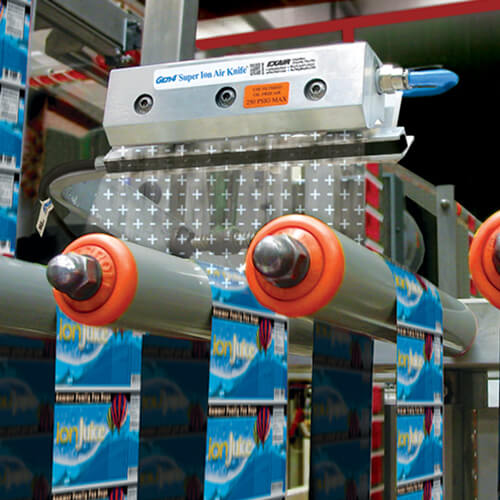
The generation of electrostatic charge is a common problem in many converting applications. This form of static electricity is known as separation charging. Separation charging occurs when two materials are in contact and the two surfaces are then separated. During separation, not all electrons can return to their original atom. This results in an immediate static charge, as electrons are transferred from one object to the other according to the triboelectric series. Because of the large surface area in most separation charging scenarios, the static charge generated is usually much greater than contact charging. Separation charging occurs in many converting applications where material is unwound from large rolls.
This effect usually occurs at high speeds, with the large area across the full width of the roll providing ideal conditions for static to build up. The charge can cause the material to stick together and not unwind properly from the roll, which in turn causes problems further down the process. Operators are also exposed to the risk of painful electric shocks. This is not only a safety risk, but also has a negative effect on productivity and morale.
A packaging manufacturer, for example, had problems on its packaging line for sweets. The high static charge discharged onto operators and repeatedly caused jams in the machine, which in turn meant machine stops, cuts and re-threading. Using the Model 7905 digital static meter, charges of over 31 kV were measured on the material.
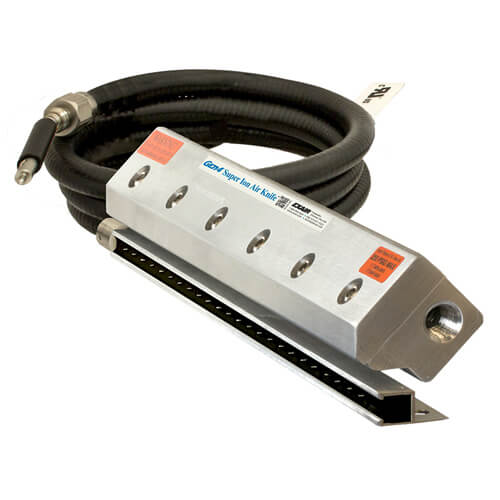
The solution was to mount a Super Ion Air Knife Model 112024 above and below the web to saturate the material with positive and negative ions. The air curtain carries the ions to the material surface and ensures that the charge is neutralised immediately on contact. After fitting the Super Ion Air Knife above and below the material, the charge was neutralised and operators were no longer exposed to the annoying electric shocks.
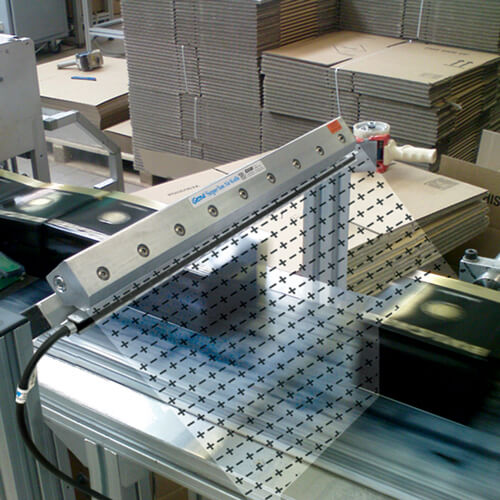
Clearing each jam in the machine took around 30 minutes. The problem occurred 3 to 4 times a day, with the machine in continuous operation. By using Super Ion Air Knives the manufacturer gained up to 2 hours of extra operating time per day.