
In many industrial manufacturing processes, localized heat is unavoidable. Whether in welding, soldering, machining, or plastics processing, elevated temperatures are often part of the process. If left unmanaged, however, excessive heat can negatively affect product quality, process stability, and overall efficiency.
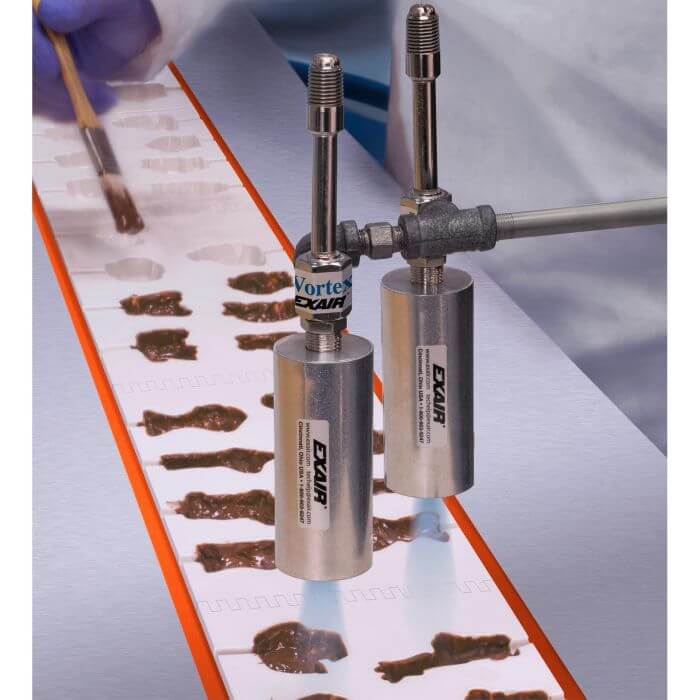
Cooling an entire production area is often neither necessary nor cost-effective. In many applications, it is sufficient to remove heat directly at its source. This is where compressed air spot cooling systems provide an effective solution. Instead of cooling large areas or entire machines, cold air is applied precisely where it is needed most.
What Problems Can Localized Overheating Cause?
Temperature spikes may occur in only a small part of a manufacturing process, yet they can have a significant impact on production. Common consequences include workpiece distortion, increased tool wear, longer cycle times, and higher levels of scrap or rework. Maintaining consistent temperatures is particularly important in automated production environments, where repeatable results are essential.
For this reason, removing heat directly at its source is often more effective than cooling larger areas or entire machines.

How Does Spot Cooling with a Vortex Tube Work?
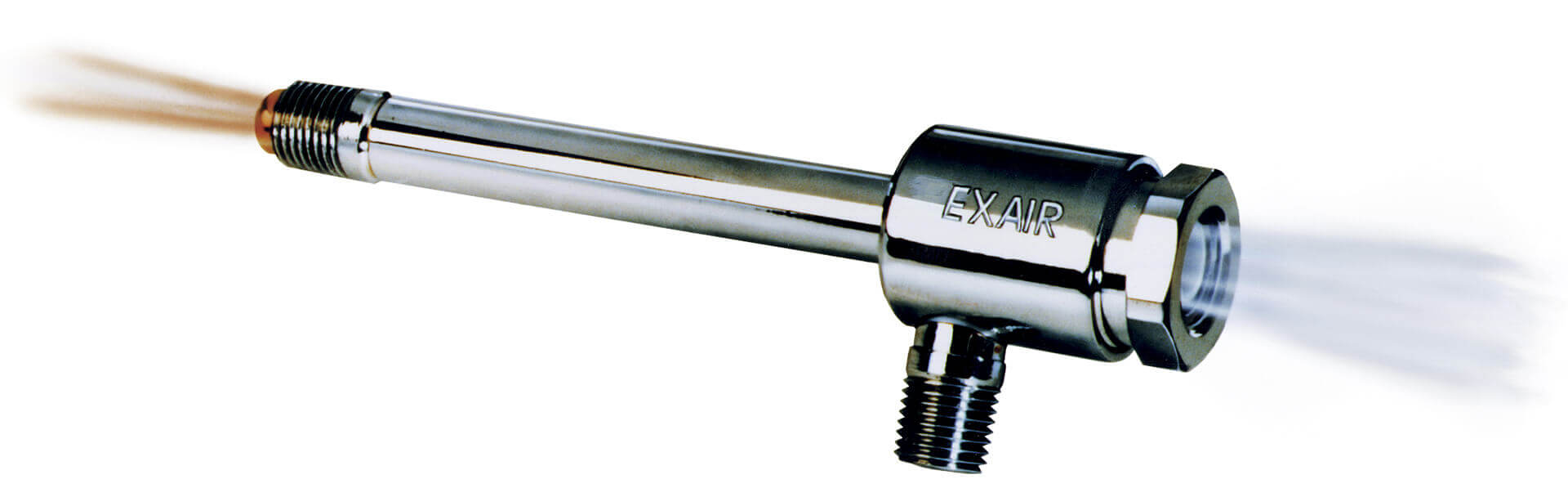
One proven method for generating cold air is vortex tube technology. A vortex tube uses compressed air to produce both a cold and a hot airflow. The cold air stream can then be directed precisely at workpieces, tools, or specific areas of a manufacturing process.
Because vortex tubes require no moving parts, electrical components, or refrigerants, they offer low maintenance requirements and high operational reliability. This makes them particularly well suited for industrial applications where simple and dependable spot cooling is required. The only requirement is access to a compressed air supply.
Why Spot Cooling Is Often the More Efficient Solution
Not every cooling application requires complex refrigeration equipment or climate control for an entire production area. In many cases, only a specific operation, tool, or section of a workpiece needs cooling.
Spot cooling provides exactly this type of targeted heat removal. Cold air is available immediately once connected to a compressed air system and can be easily adapted to changing processes. As a result, existing equipment can often be optimized without major modifications.
By cooling only the area that requires temperature control, cooling capacity is used where it delivers the greatest benefit.
Typical Applications
Soldering and Plastics Processing
In soldering applications, cold air supports the controlled cooling of solder joints without introducing additional moisture into the process. In plastics processing, targeted spot cooling can help reduce cooling times and promote a more uniform temperature distribution, helping to minimize warping and surface defects.
Welding, Metal Fabrication, and Machining
In welding operations, high temperatures can affect adjacent areas and contribute to distortion. In machining applications, temperature directly influences both tools and workpieces. Effective temperature control can help reduce tool wear, contribute to longer tool life, and support stable machining processes.
Conclusion: Flexible Cooling with Compressed Air
When excess heat affects product quality, process reliability, or productivity, compressed air spot cooling provides a simple and flexible method of targeted heat removal. Instead of cooling entire machines or production areas, cooling is applied exactly where it is needed.
Vortex tubes have proven effective in a wide range of industrial applications. They generate cold air using only compressed air, require no refrigerants, and operate without moving parts. Their low maintenance requirements and rugged design make them particularly attractive for demanding industrial environments.
For applications such as these, EXAIR Vortex Tubes provide a practical solution. They use vortex tube technology to deliver cold air precisely where it is needed for a variety of industrial cooling tasks.