
How Threaded Vacuum Conveyors Work
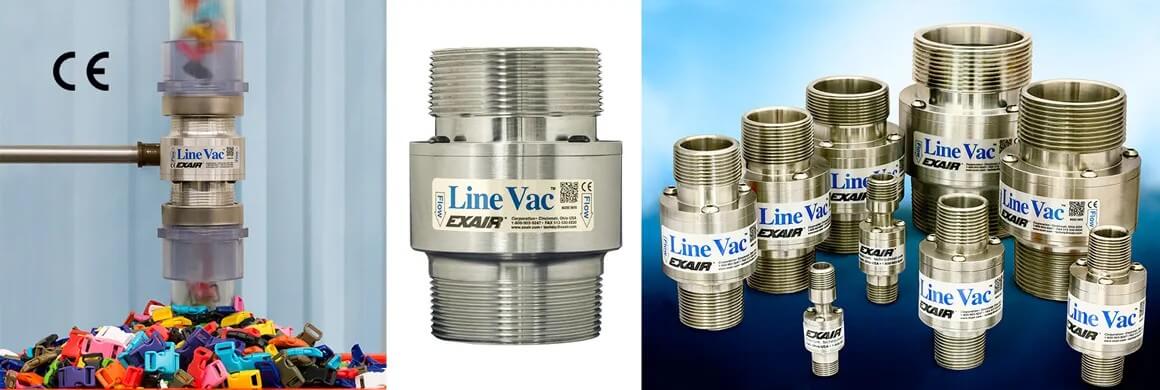
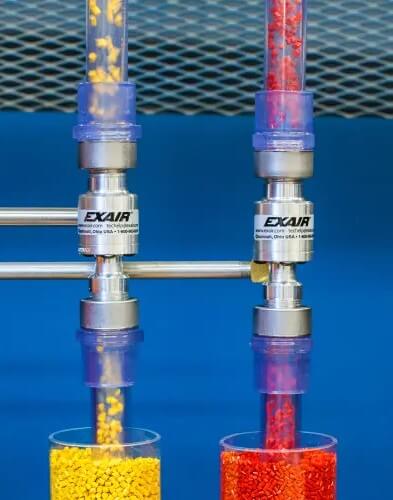
Threaded vacuum conveyors use compressed air to create suction and move materials through existing piping systems. This allows standard NPT pipework to be used for conveying applications without extensive modifications or additional equipment.
The technology is suitable for conveying bulk materials, components, trim and production scrap. In facilities where space is limited or where installing a conventional conveyor system is impractical, vacuum conveyors provide a flexible and efficient alternative.
Selecting the Right Conveyor
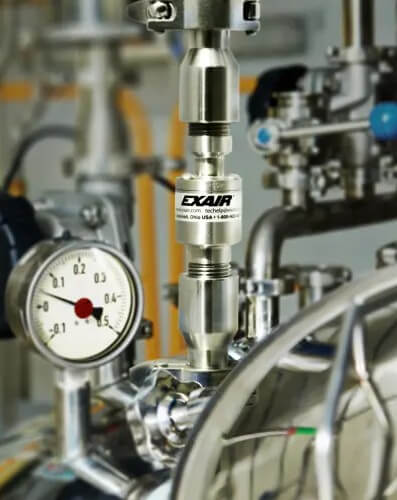
Threaded vacuum conveyors are available for NPT pipe sizes ranging from approximately 3/8″ to 3″. When selecting a system, several factors should be considered:
- Material type
- Required conveying distance
- Throughput requirements
- Vertical conveying sections
Construction material is equally important:
- Aluminium for general-purpose conveying applications
- Type 303 stainless steel for improved corrosion resistance
- Type 316 stainless steel for more demanding operating environments
- Hardened alloy steel for abrasive materials that cause accelerated wear
Selecting the appropriate construction material helps reduce wear and contributes to reliable long-term operation.
Adjusting Conveying Performance
One of the key advantages of air-operated vacuum conveyors is the ability to adjust conveying performance through operating pressure. This allows the system to be matched to different materials and process requirements.
Reducing the air pressure lowers both conveying capacity and compressed air consumption, which can be beneficial when handling lightweight materials or lower throughput volumes. Increasing the pressure boosts suction and enables higher conveying rates over longer distances.
For applications requiring additional capacity, high-performance models are also available. This flexibility allows the conveying solution to be tailored to specific operating requirements.
Suitable for High Temperatures and Abrasive Materials
Many industrial conveying applications involve demanding operating conditions. High temperatures and abrasive materials can place significant stress on conveying equipment and accelerate wear.
For elevated-temperature applications, models equipped with graphite seals are available and can operate at temperatures of up to 482°C (900°F). When handling abrasive materials, versions manufactured from hardened alloy steel provide improved wear resistance and extended service life.
Selecting the appropriate configuration helps improve reliability while reducing maintenance requirements.
Choosing the Best Solution
An effective conveying system starts with selecting a configuration that matches the application. Important factors include:
- Material characteristics
- Required conveying distance
- Process and material temperatures
- Operating and environmental conditions
By considering these factors during system selection, existing piping can be converted into an efficient conveying solution with minimal installation effort. Threaded vacuum conveyors provide a practical and cost-effective way to integrate material handling into existing production processes.