
Depending on the ambient air and the application, specific compressed air filters are needed to ensure purity and efficiency. The various filter elements can seem complicated at first. As a guide, in this article we have summarised the basic functions and distinguishing features of the standard compressed air filters in our range. All models feature particularly low differential pressures. This increases process reliability and lowers operating costs.
Systematic compressed air treatment: how our compressed air filters work and where they are used
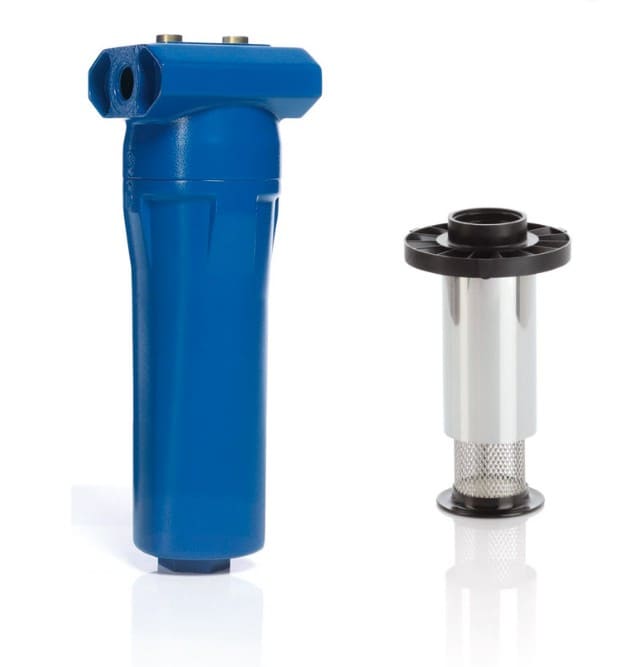
WS cyclone separator
This is a metal water separator. Its special cyclone design sets the air in a rotating motion, which forces the water vapour molecules outwards against the inside of the housing wall. There they collect and can be separated out as condensate.
Application: initial separation of water vapour and aerosols

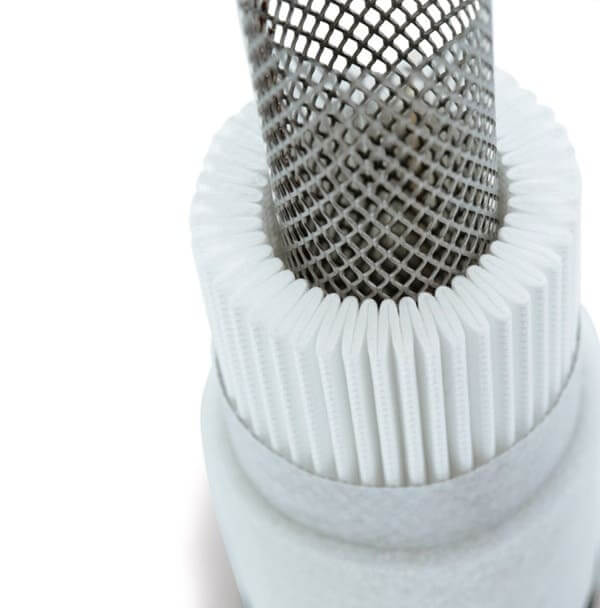
VF25, FF5, MFO, MF1, SMA coalescing filters
The filter elements of separation grades VF25, FF5, MFO, MF1 and SMA use physical principles to separate particles and liquids. Solids are removed by impaction and inertia, while oil and water aerosols are merged by what is known as the coalescing effect and filtered out. The filtered liquid collects by gravity in the lower part of the filter bowl, where it is drained either manually or automatically. The separation efficiencies of the five filter types build on one another:
VF25: coarse pre-filter (oil: class 5, solids: class 5)
FF5: fine pre-filter (oil: class 4, solids: class 3)
MFO: micro pre-filter (oil: class 3, solids: class 2)
MF1: fine filter (oil: class 2, solids: class 2)
SMA: ultra-fine filter (oil: class 1, solids: class 1)
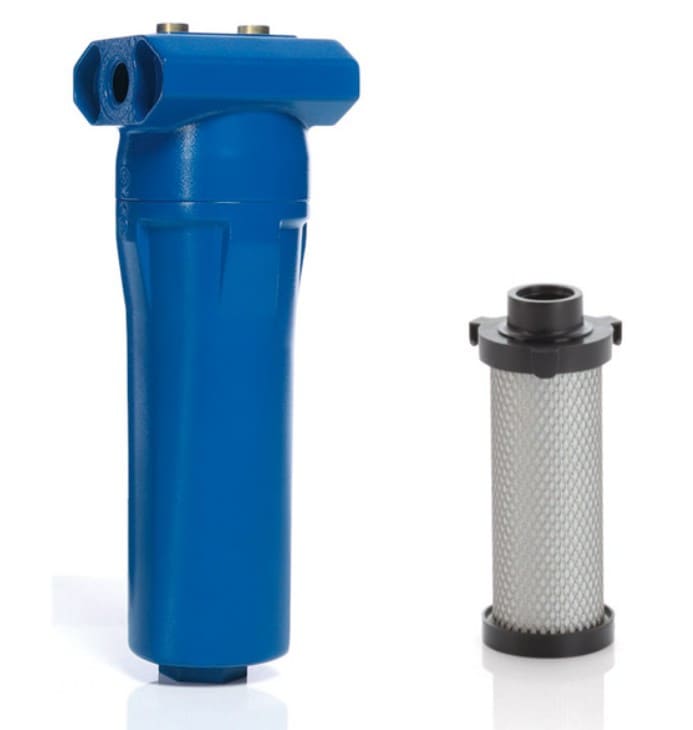
CA activated carbon filter
The activated carbon element adsorbs the finest oil vapours and odours by binding them in the activated carbon as the air flows through the filter. To extend the service life of the CA filter considerably, we recommend fitting an SMA stage upstream (see above: SMA standard filter).
Application: separation of oil vapours and odours, down to a residual content of 0.003 mg/m³
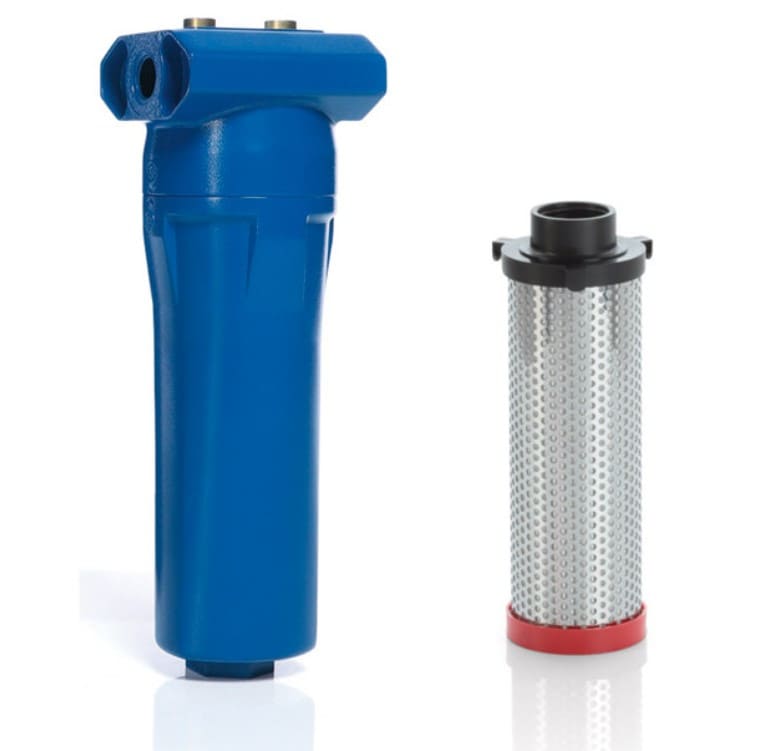
DMF, DF1, DSF fine and ultra-fine dust filters
Our DMF, DF1 and DSF dust filter elements safeguard compressed air quality at the end of the filter line, for example after an activated carbon filter.
DMF application: separation of solid particles down to 1 µm
DF1 application: separation of solid particles down to 0.1 µm
DSF application: separation of solid particles down to 0.01 µm
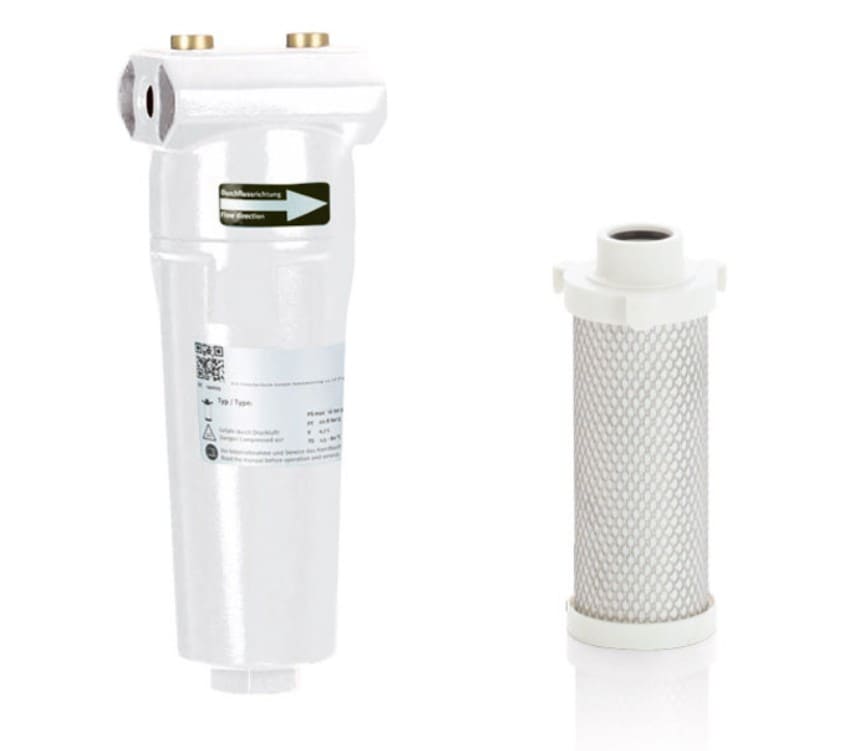
Sterile filter SE
For medical compressed air applications we offer particularly dense, sterilisable filter elements. To kill pathogens, sterile filters must be reprocessed in an autoclave at defined intervals.
Application: retention of germs and bacteria in line with BS3928; penetration 0.0001 %
Supplementary equipment and important accessories
Besides the filters, there are a number of devices and accessories that are important for industrial compressed air treatment.
- Condensate drains remove the accumulated condensate from the compressed air line and are mounted directly on the filter housing.
- Oil-water separators clean the condensate and are a prerequisite for environmentally sound disposal.
- Refrigerated compressed air dryers and adsorption dryers remove moisture from the compressed air. A low pressure dew point not only prevents corrosion and machine damage, it is also an essential requirement in some production processes.
- Pressure reducing valves and regulators optimise the air pressure for downstream processes and save energy.
Would you like to know more about compressed air filtration, or do you have a specific application?
We are here for you: by phone, by email and on site!


Daniel Amacher (Switzerland)
Tel. +41 52 53 / 37 964
Mobile +41 76 231 06 73
daniel.amacher@eputec.de



We are happy to support you with:
– Planning, project design & installation of compressed air systems
– Loan units for testing
– Custom builds for your specific requirements
– Technical safety advice & requirements analysis